
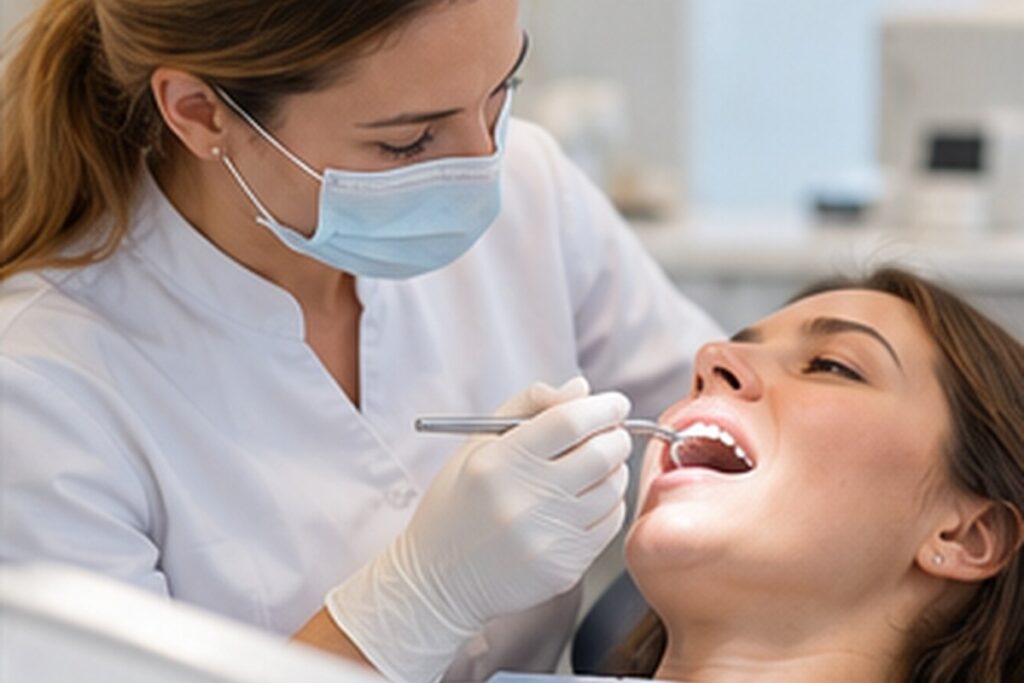
Decay, chipped edges and worn restorations do not all require the same solution. Some cause pain or sensitivity; others are discovered at a check-up. The extent of damage matters more than a photograph alone.

Assessment before treatment
The clinician examines the tooth, looks for the reason it has been damaged and considers further imaging where useful. Early changes may sometimes be monitored or managed preventively, while a cavity or larger defect may require a restoration.
Choosing the restoration
Tooth-coloured filling material can be appropriate for certain defects. A more extensive or laboratory-made restoration may be considered when the remaining tooth is weaker. The location, bite and amount of healthy structure help guide the choice. If the pulp is affected, a different treatment may be needed.
What to expect after care
Follow the advice you receive on eating, cleaning and short-lived sensitivity. Contact the practice if your bite feels unexpectedly high, a restoration breaks or pain becomes worse. Good prevention remains important after the repair.
Frequently asked questions
Does decay always hurt?
No. Some lesions develop without noticeable symptoms.
Does a broken tooth always need a crown?
No. Treatment depends on the amount of sound tooth remaining.
Can the fee be confirmed before examination?
A reliable estimate normally depends on the clinical findings and chosen restoration.